
WHY DRAW?
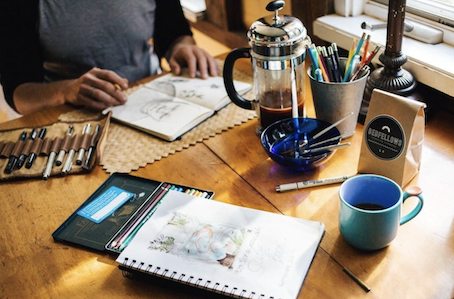
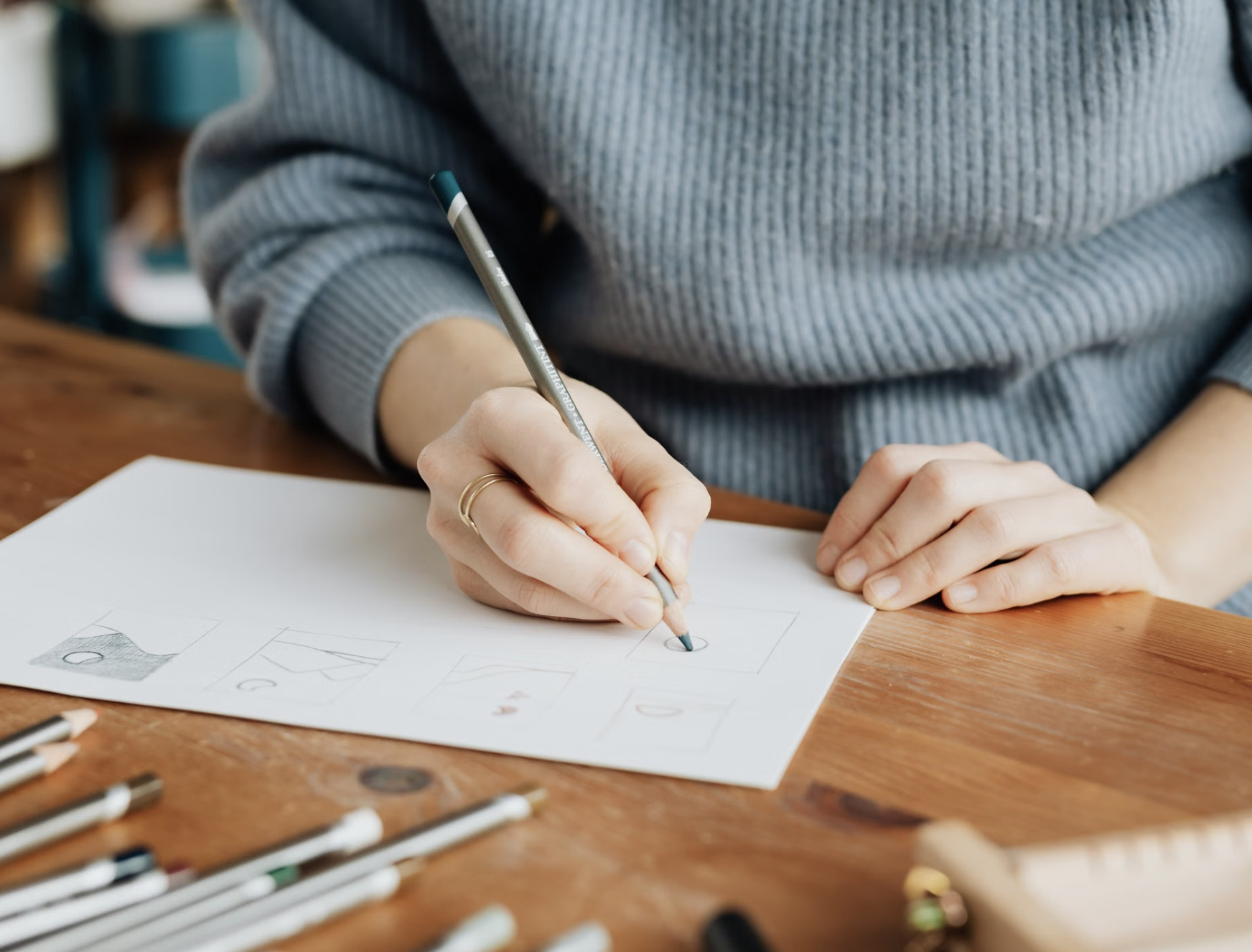
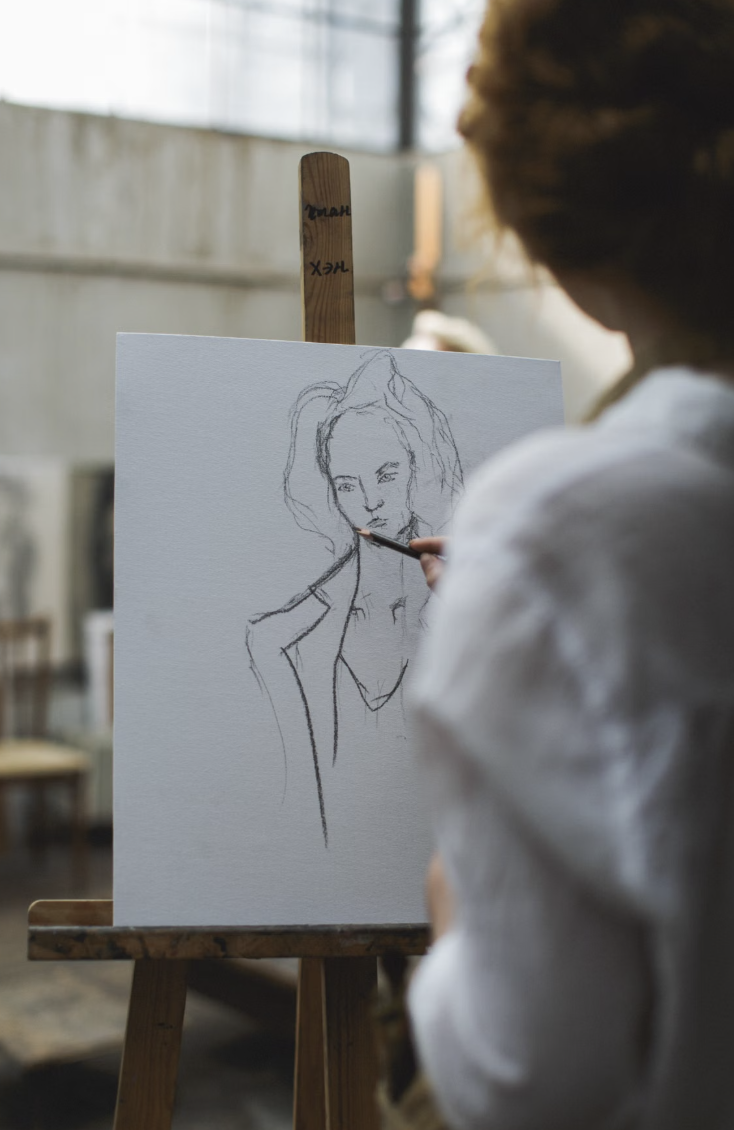
Here are some of the answers received when asked this question.
Here are 12 personal reasons someone might pick up drawing:
To slow my mind down. I spend most of my day reacting — to messages, notifications, other people's schedules. Drawing is one of the few things that makes me sit still and just look.
To remember how to be a beginner. I'm good at a lot of things now, which also means I rarely feel the particular thrill of being bad at something new and slowly getting less bad.
To have something that's just mine. Not for work, not for anyone else's approval — a private space where nobody's grading it.
To see the world more closely. I want to actually notice the way light falls across a room instead of walking through my life half-looking at things.
To keep my hands busy instead of my phone. I'd rather end an evening with a page of sketches than an hour of scrolling I can't account for.
To process things I can't quite say. Some days I don't have words for what I'm feeling, but I can put a pencil to paper and something honest comes out anyway.
To build a skill I can keep for the rest of my life. Unlike a lot of hobbies, this one only gets richer with age — there's no expiration date on getting better at drawing.
To leave a record of my life. I like the idea of looking back at a stack of sketchbooks in twenty years and seeing exactly what caught my attention at each point along the way.
To give my perfectionism somewhere low-stakes to go. A sketchbook page isn't precious. I can mess it up, turn the page, and try again.
To reconnect with something I loved as a kid. I used to draw constantly before "being productive" took over my life. I want that instinct back.
To have a reason to sit somewhere and do nothing else. A café, a park bench, a train — drawing gives me permission to just be there instead of needing to be doing something "useful."
To take care of my brain, not just my body. I already work out for my body; I want something that does the equivalent for attention, memory, and creativity as I get older.
To be able to paint better
To accompany a family member who is drawing
To follow the historical path of the old masters
Cos its fun and I like seeing myself improve at new skills
Drawing as therapy has outperformed other art forms in Randomized Controlled Trial-based comparisons for improving standard cognitive test scores MMSE ( Mini-Mental State Examination), and MRI evidence shows it's linked to measurable increases in cortical thickness in frontal brain regions" — and that's a claim backed by actual randomized trial data, not just plausible neuroscience narrative. (of which there is plenty)
Here are 12 different angles on "Why Draw?" — mixing the practical, the neurological, and the personal:
Because it trains your eyes to actually see — not just glance, but notice proportion, light, and negative space the way they really are, not the way your brain assumes them to be.
Because it's cheaper than therapy and occasionally as effective — it gives anxious energy somewhere to go and turns rumination into something you can look at instead of just feel.
Because it builds new neural pathways — especially valuable for older adults, where structured drawing practice has been linked to measurable gains in memory and attention.
Because it's a record of attention — a sketchbook is basically a diary of what you cared enough to look at closely on a given day.
Because it doesn't require permission — no gallery, no audience, no gatekeeper. Paper and a pencil is the whole barrier to entry.
Because it slows down time — ten minutes of focused drawing can feel longer and calmer than an hour of scrolling.
Because it makes you a better communicator — a rough diagram often explains an idea faster than three paragraphs of description.
Because failure is cheap — a bad drawing costs you a sheet of paper, not your reputation. It's one of the lowest-stakes ways to practice being bad at something on purpose.
Because it strengthens spatial reasoning — the same skill that helps with reading maps, packing a car trunk, or understanding how machines fit together.
Because it's portable observation — you can do it on a train, in a waiting room, at a café, anywhere your eyes can land on something interesting.
Because it connects hand and mind in a way typing doesn't — the physical act of mark-making engages memory and motor pathways differently than clicking or tapping.
Because sometimes there's nothing else to do with a feeling — some things don't have words yet, but they can still have a shape.